
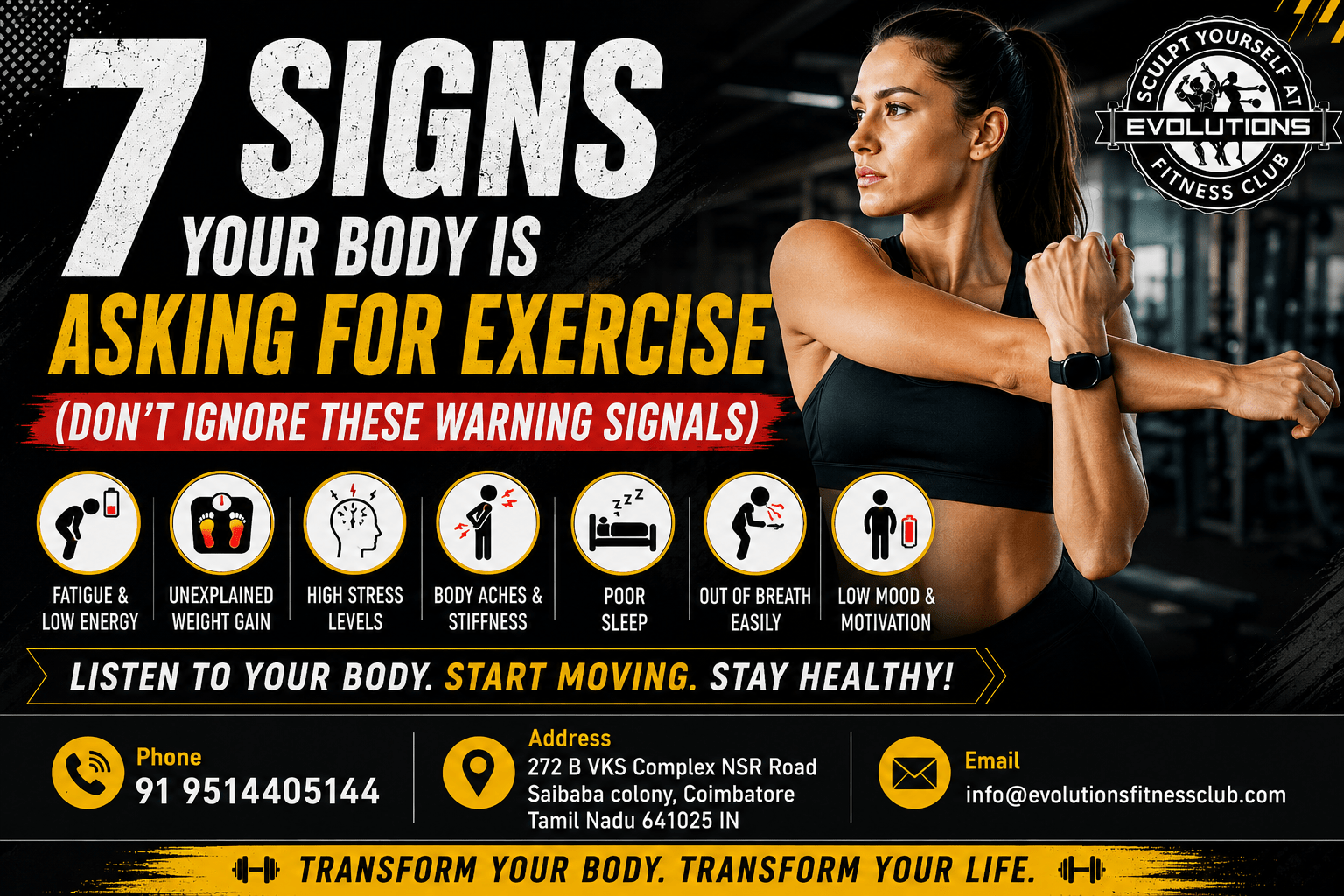
Have you been feeling unusually tired lately? Struggling with low energy, poor sleep, or unexplained body aches? Many people assume these issues are a normal part of a busy lifestyle. However, your body may actually be trying to tell you something important—it needs more movement.
In today’s digital world, long hours of sitting, reduced physical activity, and increasing stress levels have made exercise more important than ever. The good news is that your body often sends warning signs before serious health issues develop.
Let’s explore seven common signs that indicate it’s time to make exercise a regular part of your routine.
What Does It Mean When Your Body Needs Exercise?
Exercise isn’t just about losing weight or building muscles. Physical activity helps improve circulation, strengthen the heart, boost mental health, and support overall well-being.
When your body doesn’t get enough movement, it starts showing signs that something is missing. Recognizing these signals early can help you improve your health and prevent future complications.
1. Are you Constantly Feeling Tired ?
It may sound surprising, but lack of exercise can actually make you feel more exhausted.
When you remain inactive for long periods:
- Energy levels drop
- Blood circulation slows down
- Muscles become weaker
- Daily tasks feel more demanding
Regular workouts improve oxygen flow throughout the body, helping you feel more energetic and productive throughout the day.
Expert Tip:
Even a 30-minute walk can significantly boost energy levels.
2. Are you Gaining Weight Without Major Lifestyle Changes?
Have your clothes started feeling tighter even though your eating habits haven’t changed much?
A sedentary lifestyle can slow down calorie expenditure, making it easier for the body to store excess fat.
Common signs include:
- Increased belly fat
- Reduced muscle tone
- Difficulty maintaining weight
Combining exercise with healthy eating can help manage weight more effectively and improve metabolism.
3. Did your Stress Levels Are Through the Roof?
Stress has become a daily challenge for many professionals and students.
When you exercise, your body releases endorphins, often called “feel-good hormones.” These natural chemicals help reduce stress, improve mood, and enhance mental clarity.
If you’re experiencing:
- Constant anxiety
- Irritability
- Mental fatigue
- Difficulty concentrating
Your body may be asking for physical activity.
4. Are you Experiencing Frequent Body Aches and Stiffness?
Do your back, neck, or shoulders often feel stiff after sitting for long periods?
Lack of movement can lead to:
- Tight muscles
- Poor posture
- Joint discomfort
- Reduced flexibility
Regular stretching, strength training, and mobility exercises can help reduce pain and improve overall movement quality.
5. Are You’re Not Sleeping Well ?
Poor sleep and lack of exercise often go hand in hand.
People who don’t engage in regular physical activity may experience:
- Difficulty falling asleep
- Frequent waking during the night
- Feeling tired even after sleeping
Exercise helps regulate sleep patterns and improves sleep quality by reducing stress and balancing hormones.
Quick Fact:
Research consistently shows that physically active individuals tend to enjoy deeper and more restorative sleep.
6. Do You Get Out of Breath Easily?
Climbing stairs shouldn’t leave you gasping for air.
If simple activities like walking, carrying groceries, or playing with your children leave you feeling exhausted, your cardiovascular fitness may need improvement.
Regular exercise strengthens:
- Heart health
- Lung capacity
- Endurance
- Overall stamina
Over time, everyday activities become much easier.
7. Are Your Motivation and Confidence Are Declining?
Physical inactivity doesn’t just affect your body—it impacts your mindset too.
Many people who avoid exercise report:
- Low self-confidence
- Reduced motivation
- Negative mood
- Lower productivity
Exercise creates a sense of accomplishment and helps improve both physical and mental well-being.
Even small fitness achievements can boost confidence and encourage healthier habits.
Common Mistakes People Make
When they recognize these warning signs, many people make the mistake of:
- Starting intense workouts immediately
- Following unrealistic fitness plans
- Ignoring proper nutrition
- Skipping recovery days
The key is consistency, not perfection.
Start with manageable goals and gradually increase your activity level.
Best Practices for Starting an Exercise Routine
If you’re new to fitness, follow these simple tips:
- Start with 20–30 minutes of activity daily
- Choose exercises you enjoy
- Stay hydrated
- Prioritize proper form
- Get adequate sleep
- Track your progress
Remember, every step counts toward a healthier lifestyle.
Why Regular Exercise Is Important
The benefits of exercise go far beyond physical appearance.
Regular workouts can help:
- Improve heart health
- Increase energy levels
- Strengthen muscles and bones
- Reduce stress and anxiety
- Support weight management
- Improve sleep quality
- Boost confidence and mental health
The sooner you begin, the sooner your body starts rewarding you.
Conclusion
Your body is smarter than you think. Constant fatigue, weight gain, stress, poor sleep, stiffness, low stamina, and declining confidence are often signs that your body needs more movement.
The good news? You don’t need to become an athlete overnight. Small, consistent changes can lead to remarkable improvements in your health and quality of life.
Listen to your body. Start moving today, and your future self will thank you.


