
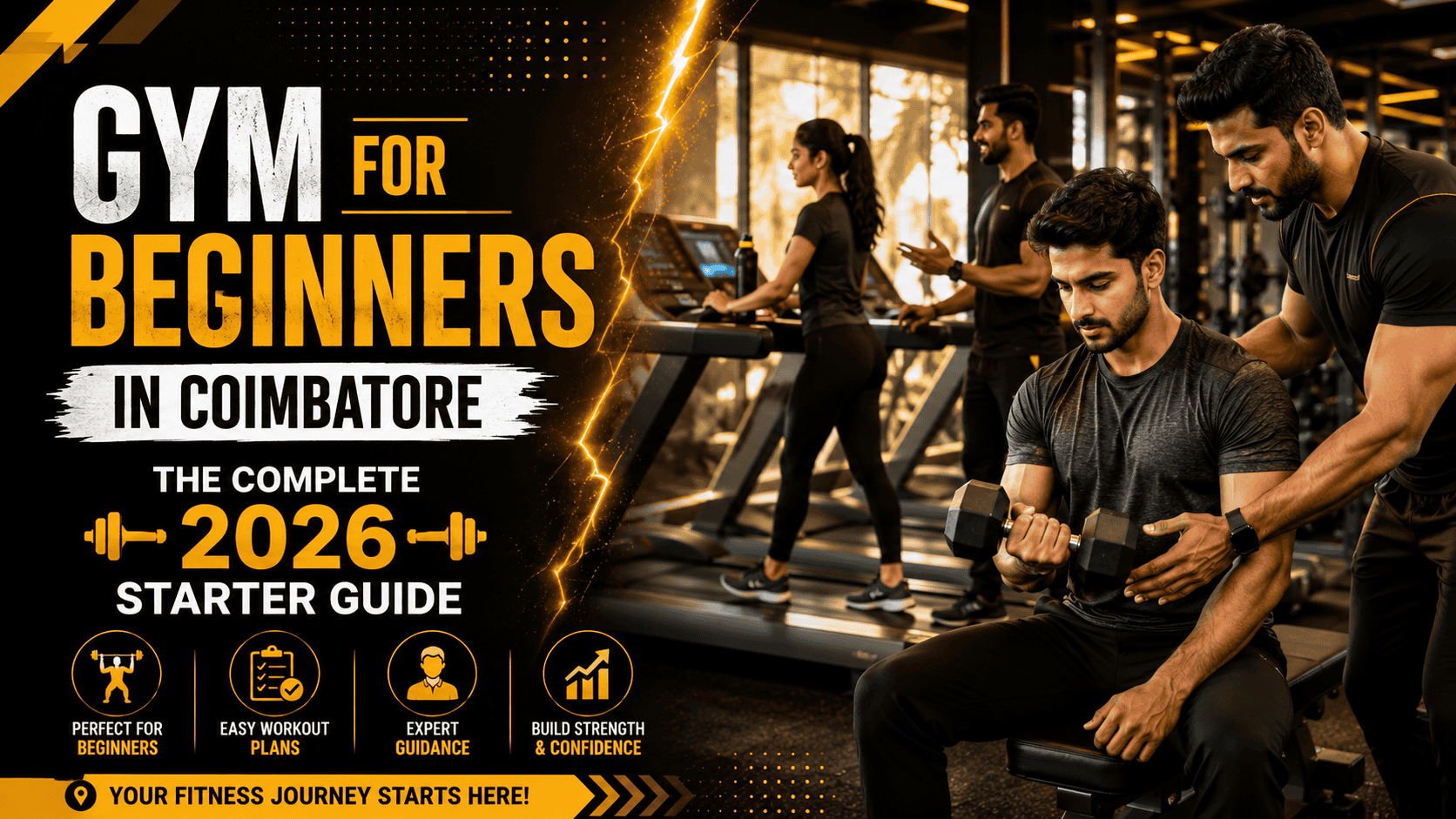
Thinking about joining a gym but don’t know where to start?
You’re not alone. Almost everyone who has ever walked into a gym for the first time has felt the same mix of excitement and intimidation — unfamiliar machines, confusing routines, and the fear of “doing it wrong.”
The good news? Getting started is far simpler than it looks. This guide breaks down everything a beginner needs — workouts, nutrition basics, gym etiquette, and practical first-timer tips — so you can walk into any gym in Coimbatore and start your fitness journey with confidence.
What Should a Beginner Know Before Joining a Gym?
Quick answer: Before joining a gym, a beginner should understand their fitness goal, get a basic health check-up if needed, choose a gym with certified trainers, learn a few foundational exercises, and set realistic expectations — results build over weeks, not days.
That one paragraph is really the whole philosophy of this guide. Everything below expands on it.
Step 1: Define Your Fitness Goal First
Walking into a gym without a goal is like starting a road trip without a destination. Before you sign up, get clear on what you actually want:
- Weight loss – reducing body fat through a mix of cardio, strength training, and diet
- Muscle gain – building lean muscle mass with progressive strength training
- General fitness – improving stamina, flexibility, and everyday energy levels
- Stress relief – using exercise to manage anxiety, sleep better, and reset mentally
- Sport-specific training – building strength or endurance for a particular activity
Your goal decides your workout split, your diet, and even which type of gym suits you best. A trainer at a good premium gym in Coimbatore will usually ask this exact question in your first consultation — so it helps to have an answer ready.
Step 2: Get a Basic Health Check (Especially If You’re Starting After a Long Gap)
You don’t need a full medical exam to start light walking or bodyweight exercises. But if you have any of the following, a quick doctor’s check-up is worth it before intense training:
- High blood pressure or heart conditions
- Diabetes
- Joint pain, old injuries, or back problems
- Being completely new to exercise after several years of inactivity
- Pregnancy or recent surgery
Most reputable gyms will also ask about medical history during onboarding so trainers can adjust your program safely.
Step 3:Choose the Right Gym for You
Not every gym suits every person, and this decision matters more than most beginners realize. Here’s what to actually look for. Start with certified trainers, since they ensure safe form and effective programming from day one. Clean, well-maintained equipment matters just as much, as it directly reduces injury risk. A beginner-friendly orientation helps you learn the machines without guesswork instead of fumbling through your first few sessions alone. Flexible timings make it far easier to stay consistent around a busy work or college schedule, while the right community and environment can make or break your long-term motivation. Finally, don’t overlook nutrition guidance — diet accounts for roughly 60-70% of visible results, so a gym that supports you on that front is worth far more than one that only focuses on workouts.
Beginner Gym Workout Plan: A Simple 4-Day Starting Structure
You don’t need a complicated 7-day split in your first few months. A simple, consistent structure works far better than an ambitious one you can’t sustain.
A beginner-friendly weekly structure:
- Day 1 – Full Body Strength (Light): Squats, push-ups (or modified), rows, plank
- Day 2 – Cardio & Core: Treadmill/cycling 20–25 minutes + core exercises
- Day 3 – Rest or Active Recovery: Walking, stretching, mobility work
- Day 4 – Full Body Strength (Progressive): Slightly heavier weights, same movement patterns
- Day 5 – Cardio + Flexibility: Steady-state cardio + yoga or stretching
- Days 6–7 – Rest
Keep sessions between 45–60 minutes. The goal in month one isn’t intensity — it’s building the habit of showing up.
Nutrition Basics for Gym Beginners
Exercise alone rarely delivers visible results without supporting nutrition. You don’t need a complicated diet plan to start — just a few consistent habits:
- Prioritize protein – include eggs, dal, paneer, chicken, fish, or curd in most meals to support muscle recovery
- Don’t skip meals – irregular eating often leads to overeating later
- Hydrate well – aim for at least 2.5–3 litres of water daily, more on training days
- Limit processed and fried foods – not banned, just minimized
- Time your pre/post-workout meals – a light meal 60–90 minutes before training, and a protein-rich meal within an hour after
A structured diet consultation alongside your workout plan often makes the difference between slow, inconsistent progress and visible results within the first few months.
Gym Etiquette Every Beginner Should Follow
Gym etiquette isn’t about rules for the sake of rules — it’s what keeps a shared space comfortable, safe, and efficient for everyone.
- Wipe down equipment with a towel after sweating on it
- Don’t hog machines during rest between sets, especially in peak hours
- Ask before working in on a machine someone else is using between sets
- Wear appropriate gym attire and closed shoes
- Keep phone calls outside the workout floor
- Respect trainers’ guidance, especially in your first few weeks
Following these simple, unwritten rules is one of the fastest ways to feel like part of the gym community rather than an outsider.
Common Beginner Mistakes to Avoid
- Starting too heavy, too fast – leads to injury and burnout
- Copying advanced routines seen online without proper form
- Ignoring warm-ups and cool-downs
- Expecting overnight results – visible change typically takes 8–12 weeks of consistency
- Skipping rest days – muscles grow during recovery, not just during training
- Neglecting sleep – 7–8 hours nightly significantly affects fat loss and muscle recovery
How Long Does It Take to See Results as a Beginner?
Quick answer: Most beginners notice improved energy and sleep within 2 weeks, visible strength gains within 4–6 weeks, and noticeable physical changes in body composition within 8–12 weeks of consistent training and proper nutrition.
Results vary by individual, but this timeline holds true across most structured beginner programs, whether the goal is fat loss, toning, or general fitness.
Personal Training, Group Classes, or Online — What Should a Beginner Choose?
There’s no single right answer here — it depends on your personality and schedule. Personal training works best for beginners who want close, one-on-one guidance, since it corrects your form early and gives you a fully customized plan. Group or Zumba classes suit those who thrive on community motivation, offering a fun, calorie-burning workout with built-in social accountability. If your schedule is unpredictable or travel-heavy, online or virtual training gives you the flexibility to train from anywhere without breaking your routine. And for most beginners in the long run, a hybrid approach — combining gym sessions with online training — tends to work best, since it keeps you consistent even when disruptions come up.
Your First-Week Gym Checklist
- Book a trainer consultation and share your fitness goal
- Get an orientation session on machines and free weights
- Pack proper gym shoes, a towel, and a water bottle
- Plan your pre- and post-workout meals
- Start with light weights and focus on form over intensity
- Schedule your workout days in advance to build consistency
- Track your starting weight, measurements, or photos for future comparison


